Funmilayo Ranco: The Forgotten Theatre Icon Who Defied Gender Norms in Nigeria
Remembered through chants, rumors, performances, and oral memory, Funmilayo Ranco remains one of the most fascinating and overlooked figures in Nigerian cultural history.
ARTS AND HISTORY
5/11/20266 min read
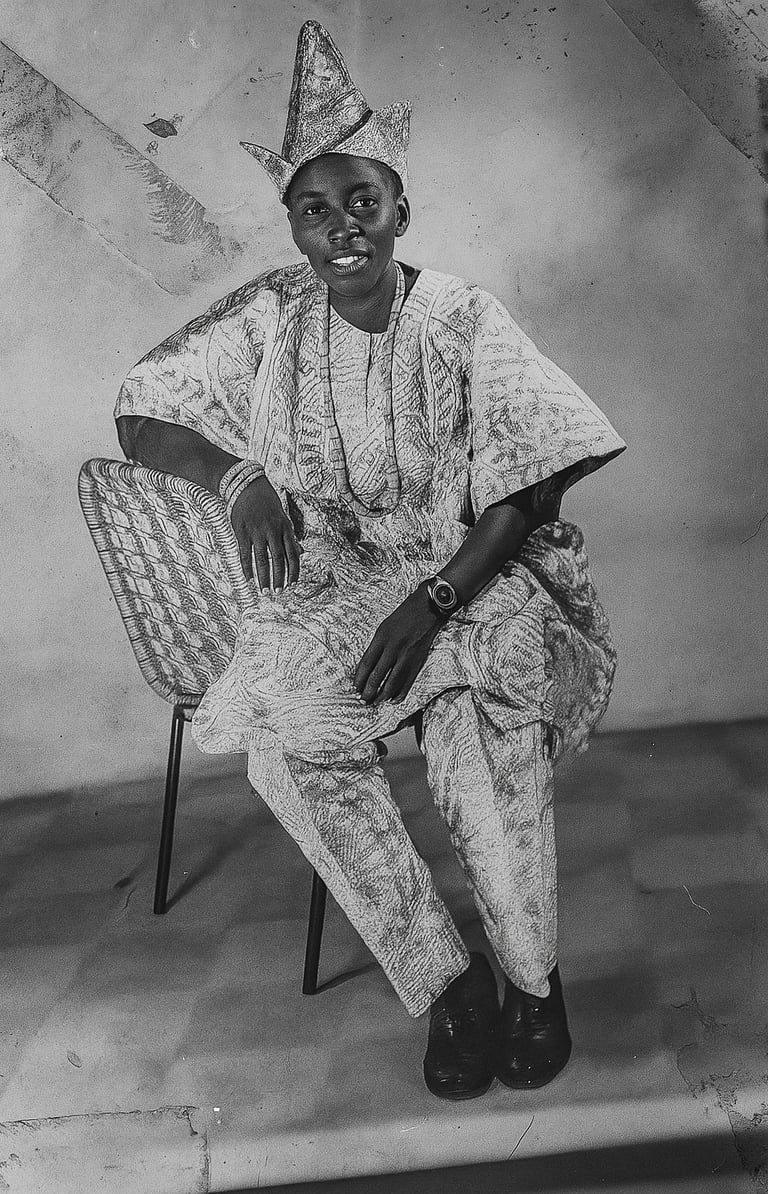
Funmilayo Ranco: The Forgotten Theatre Icon Who Defied Gender Norms in Nigeria
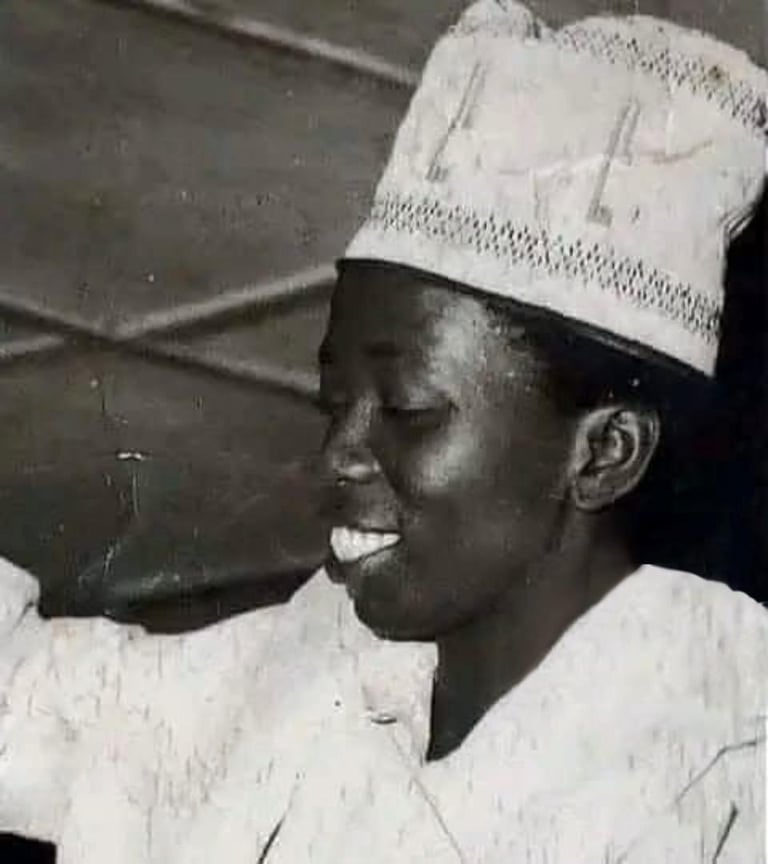
Despite their immense contributions, women in Nigerian theatre history have often been overlooked. Yet among the few who broke through the barriers of a male-dominated industry was Funmilayo Ranco, a pioneering actress and travelling theatre leader whose bold performances and unconventional public image left a lasting impression across southwestern Nigeria.
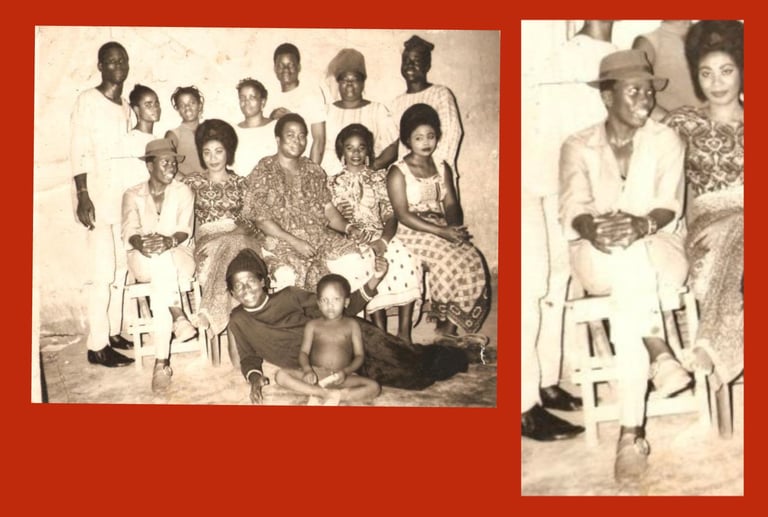
Born Olufunmilayo Rachael Ajayi in December 1947, Funmilayo Ranco became widely known for her commanding stage presence, masculine appearance, and fearless personality. Through her theatre company, Iràwò Omo Obokun International Theatre, she toured towns and schools across Yorubaland during the 1970s and early 1980s, building a loyal grassroots audience long before widespread television exposure.
Her plays explored themes of love, jealousy, friendship, and family life. Productions such as Oredunni (“Friendship is pleasurable to have”) and Jisoron’panyan (“Jealousy Kills”) resonated deeply with audiences and reflected everyday social realities.
Ranco’s performances were held in towns including Ipetu-Ijesa, Ode-Irele in Ondo State, and Ponyan in present-day Kogi State. Schools such as Olubuse Memorial High School, Anglican Grammar School Otan Ayegbaju, St. Francis Modern School Akure, and Ibokun Grammar School frequently hosted her troupe. Ticket prices ranged from 5 to 20 kobo, making her performances accessible to ordinary people.
One of the most memorable aspects of her arrival was the sight of a danfo bus bearing her name, often followed by excited children shouting “Funmilayo Ranco!” as they ran behind the vehicle through town streets.
A Woman Who Challenged Gender Expectations
Funmilayo Ranco became widely remembered for her masculine presentation. She often wore trousers and jackets, maintained a low haircut, and spoke with a deep voice that fascinated audiences and fueled public speculation.
She was frequently described as “Obìnrin bí Ọkùnrin” — “a woman like a man.” In an era with rigid expectations of femininity, her appearance and performance style stood out dramatically. Oral accounts describe her immense physical strength, including stories of wrestling men and carrying hefty individuals on her shoulders during performances.
Some community members speculated about her gender expression and physical appearance, though many of these stories remain unverified and exist primarily through oral recollections. Nevertheless, such accounts reveal how deeply her presence unsettled and fascinated audiences at the time.
Observers also recalled how she would sometimes change into traditional iro and bùbá after performances, possibly navigating societal expectations of womanhood while maintaining a public image that challenged conventional femininity.
Today, contemporary readers may interpret aspects of Ranco’s life and presentation through a queer lens. While terms such as “queer,” “lesbian,” or “gender nonconforming” were not publicly used in the same way during her era, many aspects of her life — including her masculine presentation and reported intimate relationships with women — continue to spark important discussions about gender, identity, and historical erasure in African cultural history.
Theatre, Performance, and Public Fascination
Funmilayo’s performances were remembered not only for their storytelling but also for their energy and spectacle. Audiences described her as charismatic, fearless, and physically commanding.
One recurring memory involved her legendary challenge that she would marry any man capable of defeating her in wrestling. According to local recollections, no one ever succeeded.
An observer remembered her visiting their school in 1978, while another recalled seeing her at Olubuse Memorial High School in the early 1980s. Stories circulated of her arriving in male clothing and rumors spreading through towns that she intended to challenge men to fights after performances.
Her entrance chant also became iconic among fans:
“Funmilayo, funmilayo, funmilayo Ranco.
Funmilayo, funmilayo, funmilayo Akanke.
Omo arisu maje, iere okin omo Ilesa o…”
The chant embodied confidence, resistance, and cultural pride, becoming one of the most enduring memories associated with her performances.
Early Life and Family Background
Funmilayo was born to Pa Richard Adeniyi Ajayi, a native doctor, and Madam Maria Ayoola Adenuga, a trader. She attended Ife-Oluwa Primary School in Okè-Esó, Ilésà.
Before entering theatre, she reportedly pursued boxing for a brief period, displaying athleticism and courage from an early age. However, her father eventually persuaded her to stop due to fears about injury.
Her mother strongly disapproved of her involvement in theatre and reportedly hoped she would settle into a more conventional marriage and domestic life. According to accounts from those close to the family, her mother never attended any of her performances.
Personal Relationships and Domestic Life
Running a travelling theatre troupe often required close domestic and emotional support systems. Multiple oral accounts suggest that Funmilayo lived with several women who participated in her household and theatrical activities.
One woman, Monishola, reportedly claimed to have been secretly married to Ranco in a ceremony witnessed only by her sister. Other associates and troupe members similarly recalled her relationships with multiple women.
These stories remain largely undocumented outside oral testimony and scattered interviews, yet they offer insight into forms of intimacy and companionship that existed outside dominant social expectations of the time.
For many contemporary readers, these accounts also raise broader questions about how queer histories in Africa have survived primarily through rumor, coded language, oral storytelling, and community memory rather than formal archives.
Oral Histories and Community Memory
Much of what survives about Funmilayo Ranco today comes not from official archives, recorded performances, or newspaper coverage, but from oral histories shared decades later by former audience members, friends, troupe associates, and online commentators.
Facebook comment sections, community discussions, and personal recollections have become unexpected repositories of cultural memory surrounding her life. Interestingly, while many people vividly recall her masculine clothing, deep voice, physical strength, and relationships with women, few directly describe her using explicitly queer terminology.
This absence itself reflects broader patterns of silence surrounding queer African histories, where identities were often visible yet left unnamed.
A childhood acquaintance from Oke-Esó Street in Ilésà recalled growing up alongside her family and described Ranco as respectful, masculine in appearance, and exceptionally tough. The family’s home was reportedly destroyed during the violent NPN/UPN political crisis involving Bola Ige and Michael Ajasin-era tensions in August 1984.
Though fragmented and informal, these memories collectively preserve the image of a woman who deeply impacted those who encountered her.
Why Funmilayo Ranco Was Forgotten
Despite her popularity and influence, none of Funmilayo Ranco’s performances were professionally recorded. According to former troupe members, she once received an invitation from a television station in Ibadan to document her work but declined due to financial concerns and scheduling pressures.
This decision proved historically devastating. Unlike some of her male contemporaries whose performances entered television archives and public memory, Ranco’s legacy became dependent almost entirely on oral recollection.
The marginalization of women in theatre history further contributed to her relative obscurity. Many pioneering female performers in Nigerian travelling theatre received far less scholarly attention than their male counterparts.
For this reason, the work of researchers such as Dr. Ngozie Udengwu of the University of Nigeria’s Department of Theatre and Film Studies remains especially significant. Her scholarship documenting women in Nigerian theatre provides one of the few academic foundations for preserving stories like Ranco’s before they disappear entirely.
Legacy and Cultural Importance
Nearly three decades after her death, Funmilayo Ranco remains a figure of fascination, admiration, and cultural significance.
Her life challenges conventional narratives surrounding gender, performance, femininity, and leadership in Nigerian history. She occupied a space that was difficult to categorize — a performer who inspired audiences while simultaneously unsettling social expectations.
Today, her story resonates not only as theatre history but also as part of a broader conversation about gender expression, queer erasure, memory, and the preservation of marginalized histories in Africa.
Though little material evidence of her career survives, her legacy continues through the memories of those who watched her perform, the stories passed between generations, and the growing efforts to document her place in Nigerian cultural history.
Funmilayo Ranco was more than an entertainer. She was a cultural outlier — unforgettable in presence, unmatched in spirit, and far ahead of her time.
The information presented here was compiled by Timileyin “Miley” Afolabi in August 2025. This article draws from online archives, oral recollections, social media commentary, and testimonies shared by individuals familiar with Funmilayo Ranco’s life and performances. While some accounts remain informal or unverified, together they contribute to preserving the memory of a remarkable figure whose legacy risks being forgotten.